


Phone:
+86 138 0927 7026


Views: 221 Author: Tianhai Leather Publish Time: 2026-09-24 Origin: Site


Content Menu
● Why Automotive Headliner Material Matters
● Ceiling Fabric vs Microfiber Suede Fabric
● When Ceiling Fabric Is the Better Choice
>> Choose Ceiling Fabric for High-Volume Efficiency
>> Ceiling Fabric Works Well for These Programs
>> Important Specification Questions
● When Microfiber Suede Fabric Is the Better Choice
>> Choose Microfiber Suede for Premium Interior Positioning
>> What Makes Microfiber Suede Different
● Performance Beyond Appearance
>> 1. Sagging Resistance Depends on the Whole System
>> 2. Foam Backing Must Match the Application
>> 3. Low VOC and Fogging Control Are Critical
>> 4. Flame Resistance Is a Material-System Requirement
● How Tianhai Leather Approaches Headliner Development
>> Our Customization Capabilities
● Best-Practice Installation Steps
>> 1. Is microfiber suede good for automotive headliners?
>> 2. What is the best fabric for a car ceiling headliner?
>> 3. Does microfiber suede headliner fabric sag?
>> 4. Is ceiling fabric easier to install than microfiber suede?
>> 5. What should I test before approving an automotive headliner material?
>> 6. Can Tianhai Leather provide small-batch custom headliner materials?
For automotive headliner applications, ceiling fabric and microfiber suede fabric can both create a clean, durable roof-lining solution—but they serve different design, performance, cost, and installation priorities. At Tianhai Leather (Dongguan) Co., Ltd., we help automotive interior brands, trim shops, converters, and custom-vehicle manufacturers specify the right synthetic leather and upholstery materials for each program, from small-batch prototypes to stable production supply.
The right automotive headliner material is not simply a visual decision. It affects cabin appearance, acoustic comfort, heat resistance, sagging risk, VOC performance, fogging, flame resistance, processing efficiency, and long-term customer satisfaction. Conventional ceiling fabric is often the efficient, OEM-style option for broad vehicle programs. Microfiber suede fabric is the premium tactile choice for brands that want a more refined and luxurious cabin experience.

An automotive headliner is the interior trim layer installed beneath the vehicle roof panel. Although drivers often notice it only when it sags, stains, or looks dated, the headliner plays several important roles:
- Creates a finished, cohesive ceiling appearance
- Helps conceal roof structure, wiring, sunroof mechanisms, and insulation layers
- Contributes to perceived cabin comfort
- Supports sound absorption when used with the correct foam or composite backing
- Influences interior color harmony and brand positioning
- Must work reliably with adhesive, lamination, thermoforming, and assembly processes
- Must be assessed as part of the vehicle's interior-material safety and emissions strategy
In the U.S., headlining is specifically included among interior components covered by FMVSS No. 302 flammability requirements. The regulation is intended to limit the rate at which occupant-compartment materials burn. For vehicle cabin air quality, ISO 12219-1:2021 describes whole-vehicle chamber testing conditions for measuring VOCs and carbonyl compounds in passenger-car interiors. [ecfr]
This is why a material decision should never be based on color swatches alone.
"Ceiling fabric" is a broad term. In automotive headliner applications, it typically refers to a lightweight textile—often knitted, woven, tricot, mesh-like, or nonwoven-faced—laminated with foam or combined in a multilayer composite. It is widely used because it can provide a familiar factory-style appearance with efficient cutting and installation.
Microfiber suede fabric, often called microsuede or synthetic suede, uses fine synthetic fibers to create a soft, napped surface. It is selected when a project needs a premium visual impression, a warm hand feel, and a more elevated interior character.
| Selection Factor | Conventional Ceiling Fabric | Microfiber Suede Fabric |
|---|---|---|
| Surface appearance | Clean, practical, factory-style | Premium, soft, refined, suede-like |
| Tactile experience | Smooth or lightly textured | Plush, warm, velvety |
| Typical position | Mass-market vehicles, fleet vehicles, repair projects | Premium trims, custom interiors, luxury conversions |
| Installation tolerance | Usually easier to handle and align | Requires more careful tension control and direction management |
| Cost position | Generally more economical | Usually higher due to material construction and finishing |
| Visual consistency | Strong for neutral OEM-style interiors | Strong when nap direction and shade are tightly controlled |
| Stain visibility | Depends on color and surface texture | May show hand marks, directional shading, or dust more easily |
| Brand perception | Functional and dependable | Upscale and design-forward |
| Best use case | Cost-conscious, scalable headliner production | Differentiated cabins where touch and appearance matter |
Retail and repair-market examples commonly use polyester-based, foam-backed headliner constructions, while microfiber suede products are often marketed as polyester or polyester-elastane surfaces with polyfoam backing for flexibility and shape conformity.
At Tianhai Leather, we often recommend conventional automotive ceiling fabric when the customer's priority is production practicality, OEM-style appearance, process stability, and cost discipline.
Ceiling fabric is typically a strong option when you need:
- A clean, understated cabin appearance
- Reliable roll-to-roll processing
- Efficient cutting and lamination
- Simpler installation over large roof areas
- A material that supports broad color programs
- Competitive cost for fleet, utility, and volume vehicles
- An OEM-like replacement appearance for aftermarket headliner repair
A foam-backed textile can create a softer ceiling surface and accommodate the contours of a headliner board. In general consumer guidance, foam-backed fabric is frequently identified as a practical all-around choice due to its flexibility, cost position, and factory-like look.
- Passenger-car replacement headliners
- Commercial vans and utility vehicles
- RV and camper interiors
- Bus and coach trim
- Entry-level and mid-range passenger vehicles
- Automotive aftermarket repair kits
- Boat cabins requiring a practical, textile-led look
- Furniture or wall-panel projects that need coordinated materials
Not all ceiling fabrics perform the same. A purchasing team should clarify:
1. Face construction: Knit, woven, tricot, nonwoven, mesh, or other structure
2. Fiber composition: Polyester, nylon blend, recycled-content option, or other approved construction
3. Backing: No backing, foam backing, scrim backing, laminated composite, or molded board compatibility
4. Weight and thickness: Must suit the roof geometry and the assembly process
5. Stretch direction: Essential for curves, sunroof openings, handles, consoles, and pillars
6. Color fastness: Especially relevant for black, gray, beige, and light interior palettes
7. Adhesive compatibility: Spray adhesive, hot-melt film, flame lamination, water-based adhesive, or pressure-sensitive systems
8. Testing plan: Flammability, odor, VOC, fogging, aging, abrasion, and heat/humidity performance as required by the customer
Microfiber suede fabric is the preferred option when the headliner is expected to become a visible expression of vehicle quality rather than simply a functional roof covering.
A well-selected microfiber suede headliner can make the cabin feel quieter, warmer, more detailed, and more valuable—even before the vehicle is started. Its appeal is especially strong in black, charcoal, taupe, beige, red, and custom color programs.
Microfiber suede is particularly suitable for:
- Luxury-oriented passenger vehicles
- Executive vans and VIP shuttles
- Performance-car builds
- Custom restomods
- High-end RV and motorhome interiors
- Yacht and marine cabin projects
- Show vehicles and limited-edition models
- Premium aftermarket headliner conversions
Compared with ordinary cloth, microfiber suede provides a visibly richer surface and a softer touch. General automotive headliner guidance likewise distinguishes suede as a premium finish, while noting that synthetic microsuede can offer a suede-like appearance with easier maintenance and lower cost than genuine suede.
The main advantage is not only softness. It is perceived value.
A microfiber suede headliner can support:
- A more luxurious roofline and pillar treatment
- Better visual continuity with seats, door inserts, steering-wheel wraps, or dashboard accents
- Customized color matching
- High-end quilting, embossing, perforation, or contrast-detail programs
- A more immersive premium-cabin atmosphere
However, microfiber suede should be engineered and processed correctly. Its nap can create visible shade variation depending on viewing angle, brushing direction, lighting, and fabric orientation. This is attractive when controlled, but it can look inconsistent if cut panels are installed in different directions.
For automotive headliner sourcing, an attractive surface is only the starting point. The material must function as part of a roof-system assembly.
A common misconception is that a thicker fabric automatically prevents headliner sagging. In reality, sagging is usually a system failure, not only a face-fabric failure.
Key causes include:
- Foam degradation caused by heat and aging
- Adhesive breakdown
- Poor surface preparation of the headliner board
- Insufficient adhesive coverage or open time
- Material tension during installation
- Roof heat exposure
- Incompatible foam, textile, and adhesive combinations
For Tianhai Leather customers, we recommend evaluating the full laminated or bonded construction under realistic heat and humidity conditions—not only the face material by itself.
Foam backing can add cushioning, improve conformity, and help support a finished headliner appearance. But excessive thickness may create problems around pillars, sunroof frames, grab handles, overhead consoles, and tight radii.
For example, aftermarket microfiber-suede headliner products commonly use foam-backed constructions, with some listings specifying approximately 3/16-inch total thickness. That may work for a repair or custom build, but it should not be copied blindly into an OEM or conversion program. The correct thickness depends on the headliner board, roof geometry, tooling, assembly tolerances, and trim stack.
Modern automotive interiors are increasingly evaluated not only for appearance, but also for cabin-air quality. VOCs can come from coatings, foams, adhesives, plastics, fabrics, and other interior materials. ISO 12219-1:2021 specifies whole-vehicle test chamber methods and operating conditions for determining VOCs and carbonyl compounds in passenger-vehicle cabin air.
Fogging is another important issue. SAE J1756 describes methods for evaluating whether automotive interior materials create a light-scattering deposit on glass or a measurable deposit on aluminum foil.
For a headliner project, this means buyers should evaluate:
- Face fabric
- Foam or scrim
- Adhesive system
- Laminating chemistry
- Printing or coating chemistry
- Colorants and auxiliary treatments
- Finished composite, not only individual components
FMVSS No. 302 establishes burn-resistance requirements for materials used in motor-vehicle occupant compartments. Its scope includes headlining, and materials within 13 mm of the occupant-compartment air space are subject to the requirement.
A headliner supplier should therefore avoid vague claims such as "flame retardant" without defining:
- Test standard
- Sample construction
- Test laboratory
- Test date
- Pass/fail requirement
- Whether the result applies to the fabric alone or the final laminated composite
As a manufacturer focused on synthetic leather R&D, production, and custom service, Tianhai Leather (Dongguan) Co., Ltd. puts the customer's finished application first. We do not treat automotive headliner material as a generic roll good. We treat it as a component within a complete interior system.
Our process begins with the questions that affect the final result:
- What vehicle type is being developed?
- Is the project OEM, aftermarket, conversion, marine, RV, or custom trim?
- What is the target visual level: practical, premium, or luxury?
- What headliner board and adhesive process will be used?
- Does the material need foam backing, scrim backing, or lamination support?
- What color, grain, nap, width, thickness, and stretch requirements apply?
- What environmental, flame, VOC, fogging, or durability criteria must be met?
- Is the customer ordering a pilot run, small batch, or stable volume supply?
This application-first method is especially valuable for customers who need small-batch customization without sacrificing consistency.
Tianhai Leather can support material-development discussions around:
- Microfiber suede appearance and hand feel
- Synthetic leather alternatives for automotive, marine, furniture, footwear, and bag applications
- Color development and shade matching
- Thickness and backing selection
- Surface texture, embossing, and finishing options
- Roll-width and packaging planning
- Small-batch trial orders
- Material matching across seats, door panels, wall panels, and ceiling areas
- Sampling support before production confirmation
Before choosing between ceiling fabric and microfiber suede fabric for automotive headliner applications, use this practical checklist.
| Question | If "Yes," Consider |
|---|---|
| Do you need a practical, factory-style appearance at controlled cost? | Conventional ceiling fabric |
| Do you need a soft, luxury visual effect that elevates the cabin? | Microfiber suede fabric |
| Is the project a high-volume commercial or fleet application? | Ceiling fabric |
| Is the project a VIP van, premium RV, custom car, or yacht cabin? | Microfiber suede |
| Is installation speed more important than a plush tactile finish? | Ceiling fabric |
| Will the material be used across headliner, pillars, and premium trim accents? | Microfiber suede |
| Is shade direction or nap consistency likely to be difficult to control? | Ceiling fabric, or carefully managed suede cutting |
| Do you need an economical material for replacement or repair? | Foam-backed ceiling fabric |
| Do you need a stronger luxury story for your end customer? | Microfiber suede |
Even the best automotive headliner fabric can fail if installation is poorly controlled. These are practical steps we recommend to customers and trim partners:
1. Inspect the headliner board for old foam residue, cracks, warping, and contamination.
2. Remove degraded foam completely before bonding the new material.
3. Confirm fabric direction, especially for microfiber suede, before cutting any panels.
4. Dry-fit the material across the board and verify coverage around contours, openings, and edges.
5. Use an automotive-compatible adhesive system appropriate for the substrate, foam, and service temperature.
6. Apply adhesive evenly to avoid dry areas, oversaturation, and visible surface defects.
7. Follow the adhesive open-time requirement before bonding.
8. Bond from the center outward to minimize wrinkles and trapped air.
9. Work gently around complex curves instead of stretching aggressively.
10. Trim openings only after bonding stabilizes and inspect all edges before final assembly.
For microfiber suede, always maintain one consistent nap direction across the main headliner and related trim panels. This detail makes a major difference in the finished visual quality.
Yes. Microfiber suede fabric is an excellent choice for premium automotive headliners because it provides a soft touch, upscale appearance, and strong design flexibility. It is especially suitable for luxury, custom, VIP, RV, and marine interiors. The final result depends on proper backing, adhesive compatibility, nap-direction control, and installation quality.
There is no single best material for every vehicle. Foam-backed ceiling fabric is often the best choice for cost-sensitive, OEM-style, and high-volume applications. Microfiber suede is often the best choice for premium interiors where luxury appearance and tactile quality are priorities.
Microfiber suede itself is not automatically prone to sagging. Sagging usually results from degraded foam, adhesive failure, excessive heat, poor preparation, or incorrect installation. The entire headliner system—fabric, backing, adhesive, and board—must be selected and tested together.
In many cases, yes. Conventional ceiling fabric is generally more forgiving during installation because it has a simpler surface and can be easier to align. Microfiber suede may require more careful handling because its nap direction and tension can affect the final appearance.
At minimum, consider appearance consistency, color matching, thickness, stretch, backing stability, adhesive compatibility, heat aging, humidity resistance, odor, VOCs, fogging, and flammability requirements. For regulated or OEM programs, always test the finished material system against the customer's stated specification.
Yes. Tianhai Leather supports small-batch customized material development for automotive interiors and related applications. We can discuss surface feel, color, thickness, backing, texture, and production requirements based on your project's intended use.
The decision between ceiling fabric and microfiber suede fabric should reflect your vehicle's market position, assembly process, target cost, safety requirements, and customer experience—not just the initial material price.
If you are developing an automotive headliner, VIP van ceiling, RV interior, yacht cabin, or customized vehicle-trim program, Tianhai Leather (Dongguan) Co., Ltd. can help you evaluate the right synthetic material solution before mass production. Send us your target application, material sample, required color, width, thickness, backing preference, and estimated quantity. Our team can support custom sampling, small-batch development, and dependable material supply for global customers.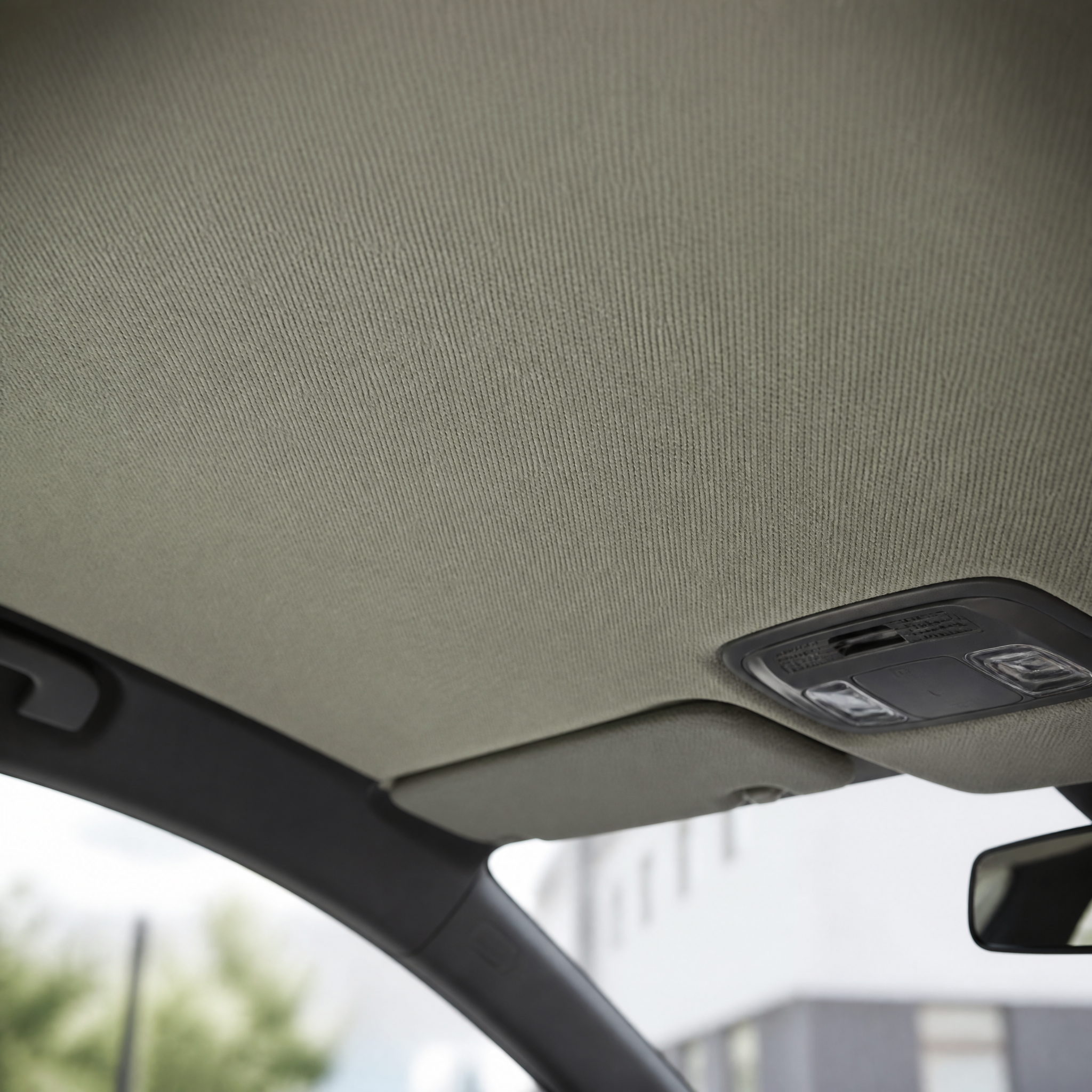
1. National Highway Traffic Safety Administration. "49 CFR § 571.302 — Flammability of Interior Materials." [View source].
2. National Highway Traffic Safety Administration. "Interpretation ID: 09-004766 302." [View source].
3. International Organization for Standardization. "ISO 12219-1:2021 — Interior Air of Road Vehicles, Part 1." [View source].
4. SAE International. "SAE J1756: Determination of the Fogging Characteristics of Interior Automotive Materials." [View source].
5. AutoZone. "Best Material for Headliners." [View source].
6. Big Z Fabric. "Upholstery Microfiber Suede Headliner Auto Boat Fabric." [View source].
Hot Tags: China, Global, OEM, private label, manufacturers, factory, suppliers, manufacturing company
