


Phone:
+86 138 0927 7026


Views: 237 Author: Tianhai Leather Publish Time: 2026-10-22 Origin: Site


Content Menu
● PU Leather vs PVC Leather for Car Seats: A Quick Comparison
● What Actually Determines Automotive Upholstery Performance?
>> Look Beyond the Visible Surface
>> "Automotive Grade" Needs Supporting Evidence
● When PU Leather Is the Better Starting Point
>> Softness and a Premium Interior Appearance
>> Comfort Requires More Than a PU Label
>> Hydrolysis Resistance Is a Critical Check
● When PVC Leather Is the Better Starting Point
>> Practical Seating With Cleaning and Budget Priorities
>> Humidity Resistance Does Not Mean Unlimited Durability
>> Compare Cost Across the Finished Project
● Five Checks That Matter More Than PU vs PVC
>> 1. Flammability of the Relevant Construction
>> 2. Emissions, Odor, and Fogging
>> 3. Heat, Light, and Cold Exposure
>> 4. Abrasion, Flexing, and Seam Performance
>> 5. Cleaner and Stain Compatibility
● A Practical Small-Batch Validation Workflow
● Which Material Fits Your Car Seat Project?
>> Premium Private-Vehicle Interiors
>> Commercial Fleets and Shared Vehicles
● Is PU Leather More Environmentally Friendly Than PVC?
● Develop Your Automotive Upholstery Brief With Tianhai Leather
>> Is PU leather better than PVC leather for car seats?
>> Which lasts longer: PU or PVC upholstery?
>> Does PU car seat leather always peel?
>> Can both materials be used with ventilated seats?
>> What documents should I request before ordering?
At Tianhai Leather (Dongguan) Co., Ltd., we approach "PU leather vs PVC leather: which material is better for car seat upholstery?" as a specification question—not simply a choice between two plastics. Our company focuses on synthetic leather research, manufacturing, and customization for automotive interiors, marine seating, furniture, footwear, and bags, including small-batch projects.
For car seats, automotive-grade PU is often the starting point when softness and a leather-like appearance take priority. Automotive-grade PVC deserves consideration when cleanability, moisture exposure, and cost control drive the brief. Neither material wins automatically.
Our recommendation is straightforward: compare the complete upholstery construction, verify application-specific test results, and evaluate a finished seat sample before committing to production.
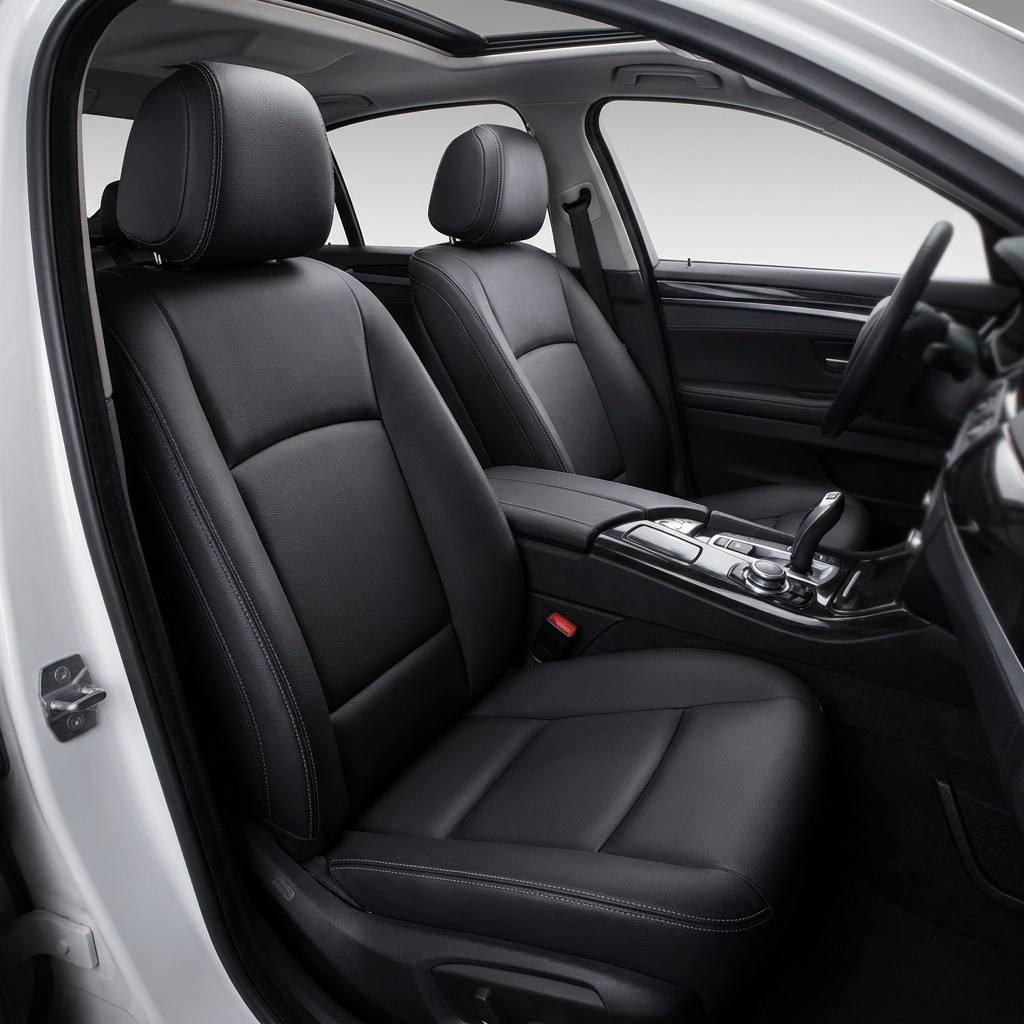
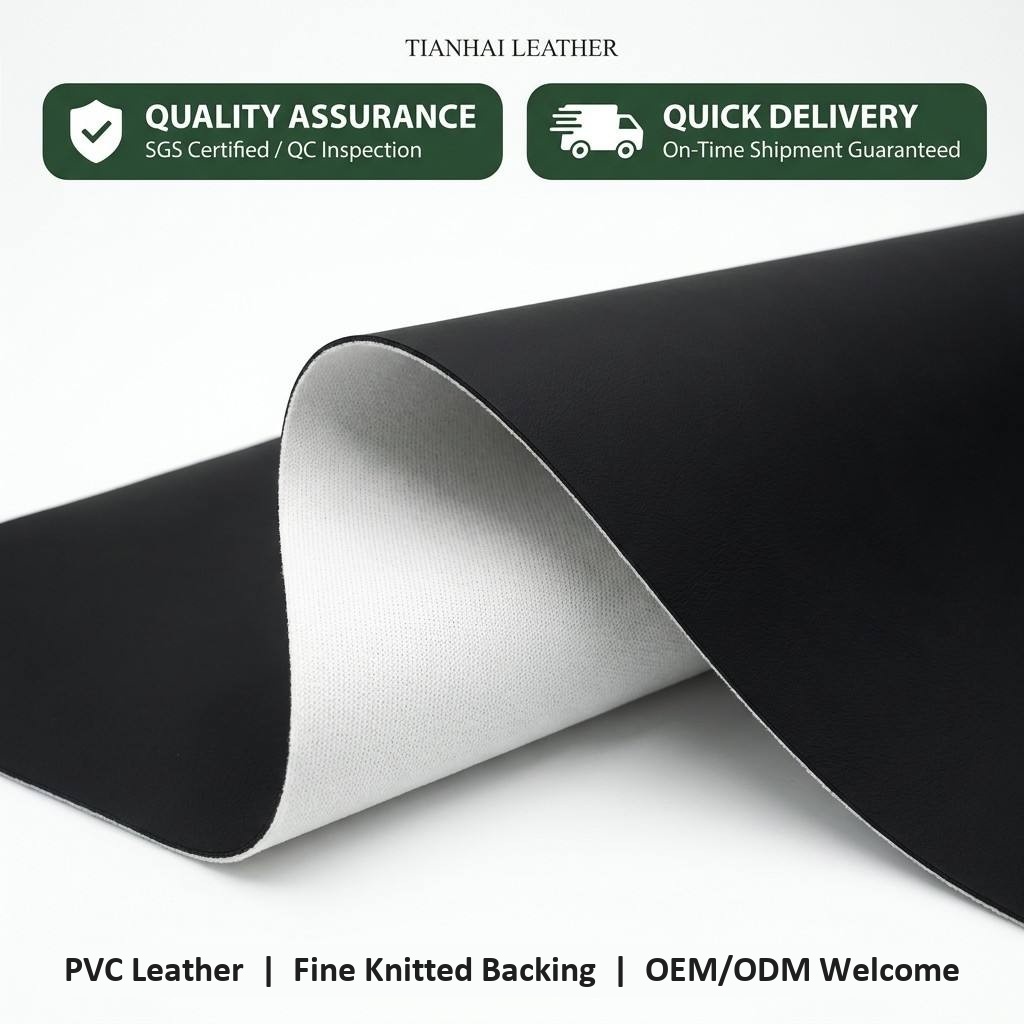
PU leather uses polyurethane in its coating system. PVC leather, commonly called vinyl upholstery, uses polyvinyl chloride. Both typically combine a polymer surface with a supporting textile, although commercial constructions vary.
| Selection factor | PU leather | PVC leather |
|---|---|---|
| Typical starting appeal | Softness and leather-like touch | Cleanability and cost control |
| Moisture-related concern | PU hydrolysis resistance requires verification | PVC does not undergo the same PU hydrolysis mechanism |
| Comfort | Depends on coating, backing, texture, and seat design | Also depends on the complete construction |
| Durability | Must be verified for the selected grade | Must be verified for the selected grade |
| Interior air quality | Requires emissions and fogging assessment | Requires emissions and fogging assessment |
| Best purchasing approach | Specify automotive performance, not just "premium PU" | Specify automotive performance, not just "heavy-duty vinyl" |
The decisive distinction is specification. A well-engineered material can outperform an unsuitable alternative regardless of its polymer label.
A synthetic leather seat covering is a layered system. Its performance depends on:
- Surface finish and protective topcoat.
- Polymer formulation and coating thickness.
- Textile backing and dimensional stability.
- Adhesion between layers.
- Compatibility with foam, adhesives, stitching, and cleaning products.
This explains why two samples described as "PU leather" can feel different and fail differently.
Some upholstery also combines PU and PVC within one construction. Buyers should request the layer composition rather than assume the product name describes every component.
At Tianhai, our proposed selection process starts with the intended use, then works backward to the material requirements.
"Automotive grade" is not a substitute for an agreed test specification.
Ask which requirements the material has been evaluated against, whether the report covers the offered construction, and whether the results satisfy your customer's requirements. A furniture upholstery report may provide useful background, but it does not automatically establish suitability for a vehicle seat.
PU is worth sampling when the design brief emphasizes a supple touch, refined grain, and a leather-like finish.
However, softness should be evaluated alongside stretch recovery and seam behavior. An attractive swatch can still wrinkle, distort, or show stress around a tightly shaped bolster.
For custom car seat upholstery, inspect PU after sewing and fitting—not only while it lies flat on a sample table.
PU is sometimes marketed as inherently breathable. That claim is too broad.
Airflow and moisture comfort depend on the coating structure, textile backing, perforation, foam, and ventilation arrangement. A continuous coated surface should not be assumed to breathe simply because it contains polyurethane.
For ventilated seats, evaluate the complete assembly. Perforating the face material alone does not establish that air will move effectively through every underlying layer.
Some polyurethane coatings are vulnerable to hydrolysis: polymer breakdown associated with heat and humidity. Symptoms can include cracking, flaking, or separation between layers.
The Association for Contract Textiles recommends hydrolysis testing for PU-coated fabrics. Its indoor contract-upholstery guideline uses a five-week minimum under the specified ISO 1419 tropical-test conditions.
That is useful technical context, not an automotive approval threshold. Vehicle programs need their own acceptance requirements.
Most importantly, accelerated test weeks do not translate directly into years of service. A "five-week test" does not justify a "five-year lifespan" claim.
PVC deserves consideration for fleet vehicles, shuttle seating, and other projects where cleaning routines and purchasing costs strongly influence material selection.
However, "easy to clean" must refer to identified cleaning products and procedures. It should not imply resistance to every disinfectant, solvent, or stain remover.
Before approval, check compatibility with the actual cleaner, dilution, contact time, wiping method, and cleaning frequency.
PVC does not experience the same hydrolysis mechanism described for polyurethane-coated fabrics. This makes it a useful candidate when humidity is a major concern.
Nevertheless, the entire product still needs evaluation. Topcoats, backing, adhesives, and other components can introduce separate weaknesses.
Request evidence for heat aging, cold flexibility, surface adhesion, and appearance retention. Do not infer the performance of the complete seat cover from the chemistry of its main coating alone.
Compare more than the price per meter.
A practical purchasing calculation includes:
- Material consumption and usable cutting yield.
- Sewing and handling requirements.
- Rejected pieces and appearance variation.
- Cleaning and maintenance needs.
- Replacement labor and vehicle downtime.
A lower purchase price is valuable only when the material also meets the project's performance requirements.
For vehicles subject to U.S. FMVSS No. 302, covered interior materials must satisfy the applicable flammability requirements. The regulation generally limits horizontal flame spread to 102 mm per minute and includes specified self-extinguishing provisions.
A passing surface-material report does not automatically establish compliance for every laminated construction. Confirm how foam, adhesives, and other layers must be represented in testing.
Do not use smell alone to judge cabin air quality. Odor, chemical emissions, and fogging are related evaluation topics, but they are not interchangeable measurements.
ISO 12219-12:2025 addresses fogging characteristics of PVC and polyurethane trim materials. Fogging assessment concerns substances that can condense onto surfaces such as glass; it is not a complete substitute for emissions testing.
Request the methods and acceptance limits required by the vehicle manufacturer or customer.
Ask whether the selected construction retains its appearance, flexibility, and adhesion after the required environmental exposure.
Check the details behind a result: exposure conditions, duration, evaluation method, and acceptance criteria. Two reports using different conditions may not support a meaningful comparison.
Abrasion is important, but it measures only part of seat durability.
A seat covering also bends, stretches, rubs at seams, and experiences concentrated loading around bolsters. Review abrasion alongside flex resistance, tear behavior, seam performance, and coating adhesion.
Likewise, abrasion-cycle results should not become a universal service-life prediction.
Test the substances relevant to the intended vehicle use.
A family vehicle may need evaluation against food, sunscreen, and clothing dye transfer. A shared vehicle may place greater emphasis on repeated cleaning.
Define how each substance is applied, how long it remains, how it is removed, and how the surface is assessed afterward.
Small-batch customization can reduce the risk of choosing an attractive material that performs poorly after installation.
For projects discussed with Tianhai Leather, we recommend the following approval sequence.
1. Define the use environment. Identify climate, vehicle type, passenger turnover, cleaning routine, and expected service conditions.
2. Create the specification. Record color, grain, thickness, backing, stretch behavior, and required test methods.
3. Compare equivalent candidates. Evaluate PU and PVC constructions intended for the same application and performance level.
4. Produce a sewn prototype. Inspect corners, seams, bolsters, perforations, and fit on the intended foam.
5. Validate performance. Review relevant reports and arrange additional testing where evidence is missing.
6. Approve a reference sample. Record the accepted construction and appearance tolerances before production.
Small-batch approval is not permission to skip qualification. Its value is creating a controlled opportunity to identify problems before a larger commitment.
Start by sampling automotive-grade PU when touch, grain definition, and a refined appearance dominate the brief.
Then verify humidity resistance, environmental aging, emissions, and suitability for the intended cleaning routine. Premium appearance alone does not establish long-term performance.
Include automotive-grade PVC in the shortlist when frequent cleaning and cost control are central requirements.
Compare it with suitable PU alternatives using the same cleaning protocol and seat construction. The best choice is the candidate that meets the complete brief—not automatically the cheapest or softest sample.
Give PU hydrolysis resistance particular attention. Include PVC as a comparison candidate, while still checking its complete construction for environmental aging and cleaning compatibility.
These are selection scenarios, not claims about completed Tianhai customer projects.
Neither polymer name proves environmental superiority.
A useful comparison asks for evidence about manufacturing inputs, restricted substances, emissions, material content, durability, and realistic end-of-life options.
Similarly, "water-based," "recycled," "bio-based," and "vegan" describe different attributes. None independently proves that a finished upholstery product has a lower overall environmental impact.
Tianhai's focus on environmentally conscious synthetic leather solutions should therefore be translated into project-specific requirements and documented product information—not blanket claims.
For buyers, the practical rule is simple: ask what the environmental statement measures, what product it covers, and what evidence supports it.
Tianhai Leather (Dongguan) Co., Ltd. combines synthetic leather development, production, and customization services, including small-batch requirements.
To discuss a car seat upholstery project, send your target market, seat application, color or grain reference, quantity, cleaning conditions, and required test specifications. Request a PU-versus-PVC sample comparison and confirm the available supporting documentation for each candidate.
This gives both teams a clearer foundation for selecting the material and planning prototype approval.
PU is often a useful starting point for softness and a leather-like appearance. PVC deserves consideration for cleaning-focused, cost-sensitive applications. The better option depends on the tested construction and intended use.
There is no reliable universal lifespan ranking. Formulation, construction, heat, humidity, cleaning, and seat design all affect performance. Compare relevant test results rather than unsupported promises of service years.
No. Peeling is not inevitable. Hydrolysis, cleaning damage, adhesion problems, or other failure mechanisms can contribute. Investigation should establish the cause rather than assume every damaged PU surface has the same problem.
A PVC-coated face can resist liquid penetration, but seams, perforations, and exposed edges can admit water. A water-resistant material surface does not make the entire seat assembly waterproof.
Potentially, yes. Suitability depends on perforation design, backing, foam, airflow, and the complete seat assembly. Validate ventilation performance using the intended construction.
Request a construction specification, relevant test reports, cleaning guidance, approved appearance sample, and agreed production tolerances. Confirm that the documents represent the material actually being supplied.
The company description and small-batch customization positioning come from the business information supplied by Tianhai Leather (Dongguan) Co., Ltd. No customer reviews, company certifications, or proprietary test results were supplied or invented.
1. National Archives and Records Administration, Electronic Code of Federal Regulations. "49 CFR § 571.302 — Standard No. 302; Flammability of Interior Materials." Primary regulatory source for the flammability discussion.
[Read the regulation]. [ecfr]
2. Association for Contract Textiles. "Hydrolysis: What You Need to Know." Source for PU hydrolysis, potential cleaning-related damage, ISO 1419 testing conditions, and the limitation on converting test weeks into service years. Its guidance concerns contract upholstery, not automotive certification.
[Read the technical explanation]. [contracttextiles]
3. International Organization for Standardization. "ISO 12219-12:2025 — Interior Air of Road Vehicles — Part 12: Test Methods for the Determination of Fogging Characteristics of Trim Materials Made From Polyvinyl Chloride (PVC) or Polyurethane in the Interior of Automobiles." Source for the scope of fogging evaluation.
[View the ISO publication information]. [iso]
4. Association for Contract Textiles. "Performance Guidelines." Source for construction- and application-specific evaluation of coated fabrics and the distinction between voluntary guidelines and all applicable requirements.
[View the guidelines]. [contracttextiles]
5. Association for Contract Textiles. "Voluntary Performance Guidelines: Coated Fabrics, Outdoor Use," February 2025. Additional technical context on layered coated-fabric construction and the limitations of accelerated hydrolysis testing. These outdoor upholstery guidelines are not automotive qualification standards.
[Read the guidelines PDF]. [contracttextiles]
Hot Tags: China, Global, OEM, private label, manufacturers, factory, suppliers, manufacturing company
