


Phone:
+86 138 0927 7026


Views: 258 Author: Tianhai Leather Publish Time: 2026-10-14 Origin: Site


Content Menu
● What Is Smooth PU Leather in Automotive Seating?
>> Why Smooth PU Leather Remains Popular
● What Is Microfiber Leather for Car Seats?
>> Why Microfiber Leather Performs Well in High-Contact Areas
● Smooth PU Leather vs Microfiber Leather: Key Differences
>> Abrasion and Wear Resistance
● A Manufacturer's View: Choose by Seat Zone, Not by Material Name
>> Recommended Material Strategy
● Practical Steps to Specify the Right Automotive Leather
● How Tianhai Leather Supports Automotive Seat Programs
● Which Material Should You Choose?
>> 1. Is microfiber leather always better than smooth PU leather for car seats?
>> 2. Can smooth PU leather be used for high-contact automotive seats?
>> 3. Does microfiber leather peel like ordinary PU leather?
>> 4. Which material is better for taxi, ride-hailing, or fleet vehicles?
>> 5. How should buyers compare PU and microfiber leather samples?
>> 6. Can Tianhai Leather provide customized automotive leather?
At Tianhai Leather (Dongguan) Co., Ltd., we help automotive brands, seat manufacturers, and interior trim suppliers choose synthetic leather that performs after thousands of entries, exits, cleaning cycles, and hours of daily use. For automotive seats with frequent contact, the decision usually comes down to smooth PU leather versus microfiber leather.
Both materials can look premium and feel comfortable. However, they behave differently under abrasion, flexing, heat, humidity, cleaning chemicals, and repeated body pressure. As a synthetic leather manufacturer specializing in automotive interiors, marine upholstery, furniture, footwear, and bags, we see the same pattern repeatedly: smooth PU leather is an excellent cost-efficient solution for many passenger vehicles, while microfiber leather is often the stronger choice for high-contact zones, premium programs, and demanding durability requirements.
This guide explains the differences from a practical manufacturing and sourcing perspective, so you can specify the right material for each seat zone rather than relying on generic "PU vs microfiber" claims.
Smooth PU leather is a polyurethane-based synthetic leather with a flat, refined surface finish. It is commonly produced by applying a PU coating system to a textile backing, such as woven or knitted fabric. The result is a smooth, flexible material that can be embossed, printed, perforated, or finished in a wide range of colors and textures.
In automotive interiors, smooth PU leather is widely used for:
- Full seat covers in passenger vehicles
- Seat inserts and center panels
- Door cards and armrests
- Headrests and console wraps
- Commercial vehicle and fleet seating
- Cost-controlled OEM and aftermarket programs
Its main advantages are design flexibility, consistent appearance, soft hand feel, and competitive cost. For many family cars, ride-hailing vehicles, and standard passenger-seat programs, a well-engineered smooth PU leather can deliver an attractive balance of comfort, appearance, and value.
From our production experience, smooth PU leather remains popular because it gives designers more freedom at a lower material cost. It can be developed with:
- Fine smooth grains or subtle embossed patterns
- Matte, semi-matte, or low-gloss finishes
- Perforation for ventilated seats
- Two-tone and contrast stitching effects
- Custom colors matched to an interior theme
- Different thicknesses and backing constructions
For buyers who need small-batch customization, smooth PU leather is often easier to develop quickly. At Tianhai Leather, we support customized colors, embossing, thickness, backing, and surface finishes for automotive and non-automotive applications.
Microfiber leather is a more advanced synthetic leather construction. It typically uses a dense microfiber nonwoven substrate combined with a polyurethane system. Instead of relying mainly on a coating applied to a textile base, the PU and microfiber structure are more closely integrated.
This construction gives microfiber leather a more leather-like hand feel, better structural stability, and stronger performance in areas exposed to repeated friction and flexing.
Microfiber leather is commonly selected for:
- Luxury vehicle seats
- Seat bolsters and side supports
- High-contact seat edges
- Steering wheels and gear-shift covers
- Premium door panels
- Marine seating and yacht interiors
- High-end furniture and commercial seating
Automotive seats do not wear evenly. The highest wear usually occurs at the seat bolsters, entry edges, stitching lines, and areas where drivers slide in and out of the vehicle. These zones experience repeated rubbing, stretching, body pressure, and contact with clothing, belts, keys, and cleaning products.
Microfiber leather is often specified for these areas because its dense fiber structure can provide:
- Higher abrasion resistance
- Better tear strength
- Improved flex endurance
- A fuller, more natural leather-like touch
- More stable appearance over time
- Stronger performance in premium interior programs
That said, "microfiber" alone does not guarantee superior performance. The final result depends on the fiber density, PU system, coating formulation, thickness, backing, finishing process, and testing standard.
The best material depends on the seat zone, vehicle segment, target cost, and expected service life. The table below summarizes the practical differences we consider during material development.
| Selection Factor | Smooth PU Leather | Microfiber Leather |
|---|---|---|
| Surface feel | Smooth, clean, flexible, and versatile | Fuller, softer, and closer to natural leather |
| Abrasion resistance | Good to very good, depending on grade | Often stronger for high-cycle contact |
| Flex durability | Suitable for many standard applications | Generally better for repeated flexing |
| Tear and seam strength | Depends on backing and coating | Usually stronger due to dense fiber structure |
| Design flexibility | Excellent color, texture, and finish options | Strong options, especially for premium looks |
| Cost efficiency | More cost-effective for large-area use | Higher material investment |
| Best use | Full seats, standard passenger vehicles, cost-sensitive programs | Bolsters, premium seats, high-contact trim |
| Customization | Fast development of colors, embossing, and finishes | Ideal for engineered performance and premium hand feel |
For seats with frequent contact, abrasion resistance is critical. Standard PU leather can perform well when it is properly engineered, but its durability depends heavily on the coating and backing. Microfiber leather generally has an advantage because its fine-fiber structure supports the PU system from within.
In practical terms, this means:
- Smooth PU leather is suitable for seat centers and areas with moderate contact.
- Microfiber leather is often preferred for bolsters, seat edges, and areas exposed to constant entry-and-exit friction.
- The most reliable approach is to test both materials using the same abrasion method, endpoint, thickness, and seam construction.
Smooth PU leather offers a clean, uniform surface that many automotive designers prefer for modern interiors. It can feel soft, lightweight, and visually refined.
Microfiber leather usually provides a fuller, warmer, and more natural hand feel. This is one reason it is frequently chosen for luxury vehicles and premium trim packages. However, comfort is not only about surface texture. Foam thickness, perforation, ventilation design, seam placement, and backing all influence how the seat feels in real use.
Automotive interiors face challenging conditions: sunlight, high cabin temperatures, humidity, temperature swings, and cleaning products. A high-quality PU system must resist yellowing, cracking, surface hardening, and coating separation.
Microfiber leather often has an advantage in humid or high-temperature environments because its integrated fiber-and-PU structure can be more stable than a conventional coated-textile construction. Still, buyers should always request aging, fogging, VOC, flammability, and color-fastness data for the exact material specification.
One of the most common mistakes in automotive upholstery sourcing is treating the entire seat as a single material decision. In reality, different seat areas experience different stresses.
| Seat Zone | Contact Level | Recommended Approach |
|---|---|---|
| Seat center panel | Moderate | Smooth PU leather or microfiber, based on cost and design |
| Seat bolster | High | Microfiber leather or high-performance PU |
| Seat entry edge | Very high | Microfiber leather or reinforced high-abrasion PU |
| Headrest | Low to moderate | Smooth PU leather is often sufficient |
| Rear seat back | Moderate | Smooth PU leather with appropriate coating |
| Premium full seat | High | Microfiber leather or a PU/microfiber hybrid specification |
| Fleet or taxi seating | Very high | High-abrasion microfiber or engineered heavy-duty PU |
This zone-based approach helps OEMs and seat makers control cost without sacrificing durability where it matters most. For example, a program may use smooth PU leather across the main seat surface while specifying microfiber leather at the bolsters and entry edges.
Before approving a material, we recommend a structured evaluation process. This reduces the risk of choosing a material that looks excellent in a sample book but fails in real vehicle use.
1. Define the contact level. Identify whether the material will be used on a low-contact headrest, a standard seat center, or a high-contact bolster.
2. Set measurable requirements. Specify abrasion cycles, flex cycles, tear strength, coating adhesion, color fastness, thickness tolerance, and seam performance.
3. Compare materials under the same test method. Do not compare a Martindale result from one supplier with a Taber result from another.
4. Evaluate the finished composite. Test the material with the intended foam, backing, adhesive, thread, and stitching design.
5. Run climate and aging tests. Include heat aging, humidity exposure, UV resistance, cold-flex performance, and cleaning-chemical compatibility.
6. Check regulatory requirements. Confirm fogging, VOC, odor, flame retardancy, and any OEM-specific environmental requirements.
7. Request a production-representative sample. A lab sample is useful, but a sample made with the actual production process gives a more reliable result.
Tianhai Leather (Dongguan) Co., Ltd. is a synthetic leather manufacturer focused on R&D, production, and customized solutions for automotive interiors, yachts, furniture, footwear, bags, and related applications. With advanced production processes, strict quality management, and more than 20 years of industry experience, we develop synthetic leather materials that meet the practical needs of global buyers.
Our automotive-related capabilities include:
- Smooth PU leather for automotive seats, door panels, armrests, and interior trim
- Microfiber leather and microfiber suede for premium seating and high-contact applications
- Custom colors, embossing, thickness, and surface finishes
- Small-batch customization for new vehicle programs, aftermarket brands, and design development
- Material consultation for abrasion, flexing, aging, cleanability, and application-specific requirements
- Stable supply and professional customization services for global customers
We understand that automotive buyers need more than an attractive swatch. They need a material that can pass validation, support efficient cutting and sewing, maintain appearance over time, and align with the program's cost target.
Choose smooth PU leather when your priority is:
- Cost efficiency for full-seat coverage
- Broad color and texture flexibility
- A clean, smooth modern appearance
- Standard passenger-vehicle seating
- Fast development and small-batch customization
Choose microfiber leather when your priority is:
- High-contact durability
- Premium hand feel and luxury positioning
- Stronger abrasion and flex performance
- Seat bolsters, entry edges, and demanding trim areas
- Long-term appearance retention in premium vehicles
For many automotive programs, the best answer is not "PU or microfiber." It is a zone-based material strategy: use smooth PU leather where cost and design flexibility matter, and use microfiber leather where frequent contact and long-term durability matter most.
No. Microfiber leather often performs better in high-contact and premium applications, but smooth PU leather can be the better choice when cost, design flexibility, and large-area coverage are priorities. The correct choice depends on the seat zone, required test performance, and target vehicle segment.
Yes. A high-quality smooth PU leather can be engineered for automotive seating, especially when it uses a durable PU system, suitable backing, and validated abrasion and flex performance. For bolsters and entry edges, however, microfiber leather or a reinforced high-performance PU may be more suitable.
Peeling is usually related to the separation between a PU coating and its base material. Because microfiber leather uses a dense microfiber structure more deeply integrated with PU, quality microfiber constructions can offer better resistance to this type of failure. Still, buyers should verify aging and adhesion performance for the specific product.
For vehicles with extremely high daily use, microfiber leather is often the safer choice for bolsters, seat edges, and other high-friction areas. A heavy-duty engineered PU can also be appropriate if it meets the required abrasion, cleaning, and aging standards.
Compare them under identical conditions: same thickness range, backing type, test method, abrasion endpoint, flex cycle count, cleaning chemical, and seam construction. Also review heat aging, humidity resistance, color fastness, fogging, VOC, and flammability data.
Yes. Tianhai Leather provides customized smooth PU leather, microfiber leather, and microfiber suede solutions for automotive interiors and other applications. We support customized colors, textures, thicknesses, finishes, and small-batch development.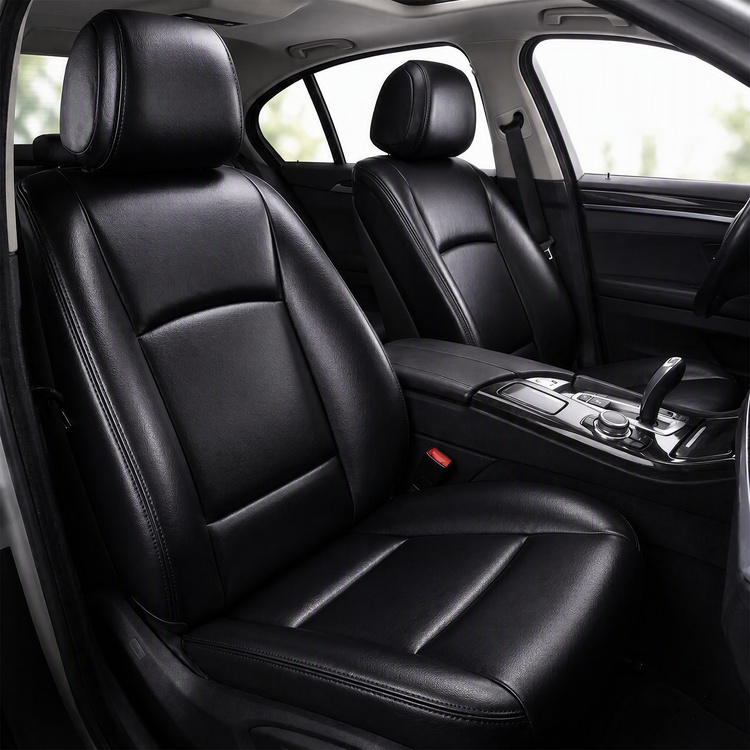
- [Tianhai Leather (Dongguan) Co., Ltd. — PU Leather]
- [Tianhai Leather — Suede Fabric and Microfiber Materials]
- [Tianhai Leather — Contact Information]
- [Microfiber Leather vs PU Leather: Which Is Better?]
- [Microfiber Leather vs PU Leather: Which Material Is Better in 2026?]
- [Automotive Leather — Seat Wear, Abrasion, and Material Selection]
- [Best Automotive Synthetic Leather for Car Seats — Buyer's Guide]
- [How to Choose the Right Faux Leather Sheet: Key Factors for Buyers]
Hot Tags: China, Global, OEM, private label, manufacturers, factory, suppliers, manufacturing company
