


Phone:
+86 138 0927 7026


Views: 259 Author: Tianhai Leather Publish Time: 2026-10-23 Origin: Site


Content Menu
● What Is Microfiber Leather Made Of?
>> The Three Main Structural Elements
● How Is Microfiber Leather Manufactured?
● Microfiber Leather vs. PU Leather vs. Genuine Leather
● What Are the Benefits of Microfiber Leather?
>> Consistent Appearance for Coordinated Products
>> Flexible Design and Customization
>> Potential for Demanding Applications
● Where Is Microfiber Leather Used?
>> Yacht and Marine Upholstery
>> Furniture and Commercial Seating
>> Footwear, Bags, and Accessories
● How Durable Is Microfiber Leather? Test More Than Abrasion
>> Hydrolysis: The Failure Mode Buyers Often Miss
>> Ask What the Test Actually Measures
● Is Microfiber Leather Eco-Friendly?
>> Questions Behind a Credible Environmental Claim
● How to Choose Microfiber Leather for Small-Batch Customization
>> Step 1: Define the Service Environment
>> Step 2: Create a Written Material Brief
>> Step 3: Approve Appearance and Processing Separately
>> Step 4: Validate a Trial Batch
>> Step 5: Establish Repeat-Order Controls
● How to Clean and Maintain Microfiber Leather
● Frequently Asked Questions About Microfiber Leather
>> 1. Is Microfiber Leather Real Leather?
>> 2. Is Microfiber Leather Better Than PU Leather?
>> 3. Does Microfiber Leather Peel?
>> 4. Is Microfiber Leather Waterproof?
>> 5. How Long Does Microfiber Leather Last?
>> 6. Is Microfiber Leather Breathable?
>> 7. Can Microfiber Leather Be Customized in Small Batches?
● Develop Your Microfiber Leather Specification With Tianhai Leather
At Tianhai Leather (Dongguan) Co., Ltd., we develop, manufacture, and customize synthetic leather for automotive interiors, yachts, furniture, footwear, and bags. When buyers ask, "what is microfiber leather?", our answer begins with its construction: it is a leather-like synthetic material built around an ultrafine-fiber nonwoven structure, usually combined with polyurethane.
However, understanding the definition is only the first step. Buyers also need to know how microfiber leather differs from conventional PU leather, which performance claims deserve scrutiny, and how to select the right grade.
This guide explains those differences from a manufacturer's perspective, with practical advice for product developers, upholstery specialists, and international sourcing teams.

Microfiber leather combines very fine synthetic fibers with a polymer system that provides cohesion, flexibility, and, in many products, a finished leather-like surface.
Common fibers include polyamide, also called nylon, and polyester. The precise composition depends on the product.
Unlike a conventional woven backing, a microfiber nonwoven contains fibers entangled into a three-dimensional network. Polyurethane may penetrate this structure, while additional surface layers create the desired appearance and protection.
- Fiber network: Supports strength, dimensional stability, and the material's underlying feel.
- Polyurethane system: Helps bind the structure and influences flexibility and aging behavior.
- Surface finish: Controls grain, gloss, color, touch, and resistance to everyday contact.
Some microfiber materials have a smooth, embossed finish. Others have a suede-like surface. These constructions should not be treated as interchangeable.
The key purchasing principle is construction: two materials labeled "microfiber leather" can perform very differently because their fibers, resins, finishes, and processing methods differ.
Production methods vary, but a simplified manufacturing sequence includes five stages:
1. Fiber preparation: Fine fibers or precursor fibers are selected for the intended material.
2. Nonwoven formation: Fibers are consolidated into an interconnected supporting structure.
3. Polymer integration: Polyurethane is introduced to achieve the required cohesion and flexibility.
4. Surface development: Depending on the product, coating, embossing, coloring, or suede finishing establishes the appearance.
5. Inspection and testing: Thickness, color, surface condition, and relevant physical properties are checked.
Not every production route follows exactly the same sequence. Some processes create ultrafine fibers by separating components within composite precursor fibers.
From a sourcing standpoint, the important question is not whether a supplier uses an impressive technical label. It is whether the finished construction consistently meets the application's requirements.
A common misunderstanding is that microfiber leather and PU leather are completely separate materials.
In fact, many microfiber leathers contain polyurethane. In commercial comparisons, "PU leather" usually means a more conventional polyurethane-coated material with a woven, knitted, or other backing.
| Comparison Point | Microfiber Leather | Conventional PU Leather | Genuine Leather |
|---|---|---|---|
| Basic structure | Ultrafine-fiber nonwoven combined with polymer | PU coating over a supporting substrate | Processed animal hide |
| Appearance | Engineered grain or suede-like finish | Broad range of engineered finishes | Natural features, sometimes heavily corrected |
| Consistency | Can offer controlled thickness and appearance | Can offer controlled thickness and appearance | Natural variation requires grading |
| Performance | Depends on fiber, resin, finish, and construction | Depends on backing, resin, finish, and construction | Depends on hide quality, tanning, and finishing |
| Main buying consideration | Verify the complete material specification | Avoid judging quality by price alone | Identify the actual leather grade and finish |
Microfiber leather is not automatically superior in every category. A well-engineered conventional PU product may outperform a poorly formulated microfiber material in particular tests.
Likewise, genuine leather is not one uniform benchmark. Full-grain upholstery leather and heavily coated split leather have different characteristics.
Manufactured surfaces can help buyers coordinate color, grain, and gloss across different components.
This matters when a project includes seat panels, armrests, bags, or matching furniture pieces. Nevertheless, consistency still requires approved standards and production controls.
Depending on construction and production capability, microfiber leather can be developed with different thicknesses, textures, softness levels, and surface finishes.
For product developers, this creates room to balance appearance with cutting, stitching, wrapping, and assembly requirements.
Appropriately engineered grades can suit products exposed to repeated handling, flexing, and cleaning.
However, "suitable for heavy use" should describe a verified product—not the entire microfiber category. Request evidence that reflects the actual service environment.
Microfiber leather offers an alternative for projects seeking a leather-like appearance without using animal hide.
If the finished product must meet a vegan specification, verify the complete formulation, including adhesives, finishes, and processing inputs. The material name alone is not enough.
At Tianhai Leather, our synthetic-leather development and customization focus covers several application sectors. Each requires a different evaluation plan.
Seats, door panels, consoles, and trim components may face sunlight, heat, repeated contact, perspiration, and cleaning chemicals.
Automotive buyers should establish the applicable requirements for emissions, fogging, flammability, aging, and manufacturing compatibility before selecting a material.
Marine seating can face humidity, strong sunlight, wet clothing, and demanding cleaning conditions.
An indoor upholstery grade should not be assumed suitable for exposed marine use. Outdoor exposure, moisture resistance, surface cleanability, and relevant safety requirements need separate verification.
Furniture buyers must balance appearance, comfort, cleaning, and service intensity.
A decorative chair in occasional use presents a different risk profile from hospitality seating cleaned repeatedly throughout the day.
Footwear may require repeated-flex performance, suitable moisture handling, and compatibility with assembly processes.
Bags and accessories may place greater emphasis on seam strength, edge finishing, color transfer, and appearance retention. Specifications should follow the finished product's function.
Durability is not a single number.
A material may resist surface rubbing yet deteriorate under heat and moisture. Another may retain its coating but show unacceptable color transfer or seam damage.
Hydrolysis is chemical degradation that can affect polyurethane under prolonged heat and moisture exposure.
Visible symptoms can include cracking, flaking, or delamination. A strong microfiber backing does not automatically protect an unsuitable polyurethane system.
The Association for Contract Textiles recommends ISO 1419 Tropical Test Method C for evaluating hydrolysis resistance. Its guidance describes exposure at 70°C and at least 95% relative humidity, with periodic visual assessment.
For general indoor contract upholstery, ACT identifies a five-week minimum guideline. This is an application-specific voluntary benchmark, not a universal requirement for every product.
Most importantly, five weeks in a test chamber does not mean five years of field life.
Before comparing reports, confirm:
- The test method and version.
- Specimen preparation and conditioning.
- Exposure conditions and duration.
- Failure criteria and assessment procedure.
- Whether the report identifies the exact supplied material.
Abrasion figures from different methods should not be treated as directly equivalent.
For demanding projects, consider evaluating relevant properties after aging as well as on new material. That helps reveal weaknesses a fresh sample may conceal.
Microfiber leather should not be described as automatically environmentally friendly.
Its environmental profile depends on raw materials, manufacturing chemistry, energy use, service life, and disposal options.
Potential improvements may include recycled inputs, waterborne polyurethane systems, solvent-reduction measures, or longer useful service. However, each claim needs evidence tied to the specific product.
A waterborne process does not, by itself, establish that a finished material is biodegradable, recyclable, or lower-impact across its entire lifecycle.
1. What percentage of recycled or renewable content is present?
2. Which component contains that content?
3. How is the percentage calculated and verified?
4. Which restricted-substance requirements were assessed?
5. Does any comparative environmental claim use a clear, equivalent basis?
At Tianhai Leather, environmental objectives form part of our product-development positioning. For a purchasing decision, those objectives should be translated into documented requirements rather than broad promotional language.
Small-batch development works best when appearance, performance, and manufacturing requirements are agreed early.
Specify the finished product, indoor or outdoor use, expected contact, climate, and cleaning routine.
Include the destination market and any customer or regulatory requirements.
Record the target:
- Thickness and usable width.
- Color, grain, gloss, and softness.
- Backing appearance and stretch behavior.
- Physical and aging performance.
- Environmental documentation.
- Trial quantity and intended production volume.
Avoid relying on "premium quality" as a specification.
A visually attractive sample may still cause problems during sewing, wrapping, lamination, or edge finishing.
Evaluate a physical sample in the actual manufacturing process. Check the finished component, not only the flat swatch.
A trial batch helps assess whether the selected construction works beyond a laboratory-sized sample.
Review cutting behavior, assembly quality, usable yield, and appearance across multiple finished pieces.
Keep an approved reference sample and documented tolerances.
For customized microfiber leather, agree on minimum order quantity, lead time, inspection criteria, and how changes to formulation or finish will be communicated.
This process reduces ambiguity when moving from development to repeat supply.
Always follow the care instructions for the specific finish.
For many finished surfaces, a soft cloth and a compatible mild cleaning solution are a sensible starting point. Test unfamiliar products on an inconspicuous area first.
Avoid assuming that solvents, bleach, disinfectants, or abrasive pads are safe simply because the material is synthetic.
Suede-like microfiber may require a different cleaning approach from smooth coated microfiber.
For commercial projects, validate the intended cleaning product before approval. Cleaning compatibility belongs in material selection, not only in the maintenance manual.
No. It is a synthetic leather-like material, not animal hide. Its appearance can resemble leather, but its fiber and polymer structure is different.
Not automatically. Many microfiber leathers contain PU. Compare the backing structure, resin system, surface finish, and verified performance rather than relying on category names.
It can. Peeling may result from coating degradation, poor adhesion, unsuitable cleaning, or other stresses. Hydrolysis resistance and adhesion testing help assess relevant risks.
Some grades resist surface water well, but that does not make every construction or finished product waterproof. Seams, perforations, edges, and exposure conditions also matter.
There is no reliable universal lifespan. Service conditions, construction, cleaning, and maintenance all influence useful life. Accelerated-aging results should not be converted directly into years.
Breathability varies with the fiber structure, polymer system, coating, and finishing. Request air-permeability or moisture-vapor data when comfort depends on these properties.
Small-batch customization may be possible, depending on the construction and finish. Confirm minimum quantities, development costs, sample approval requirements, and lead time with the manufacturer.
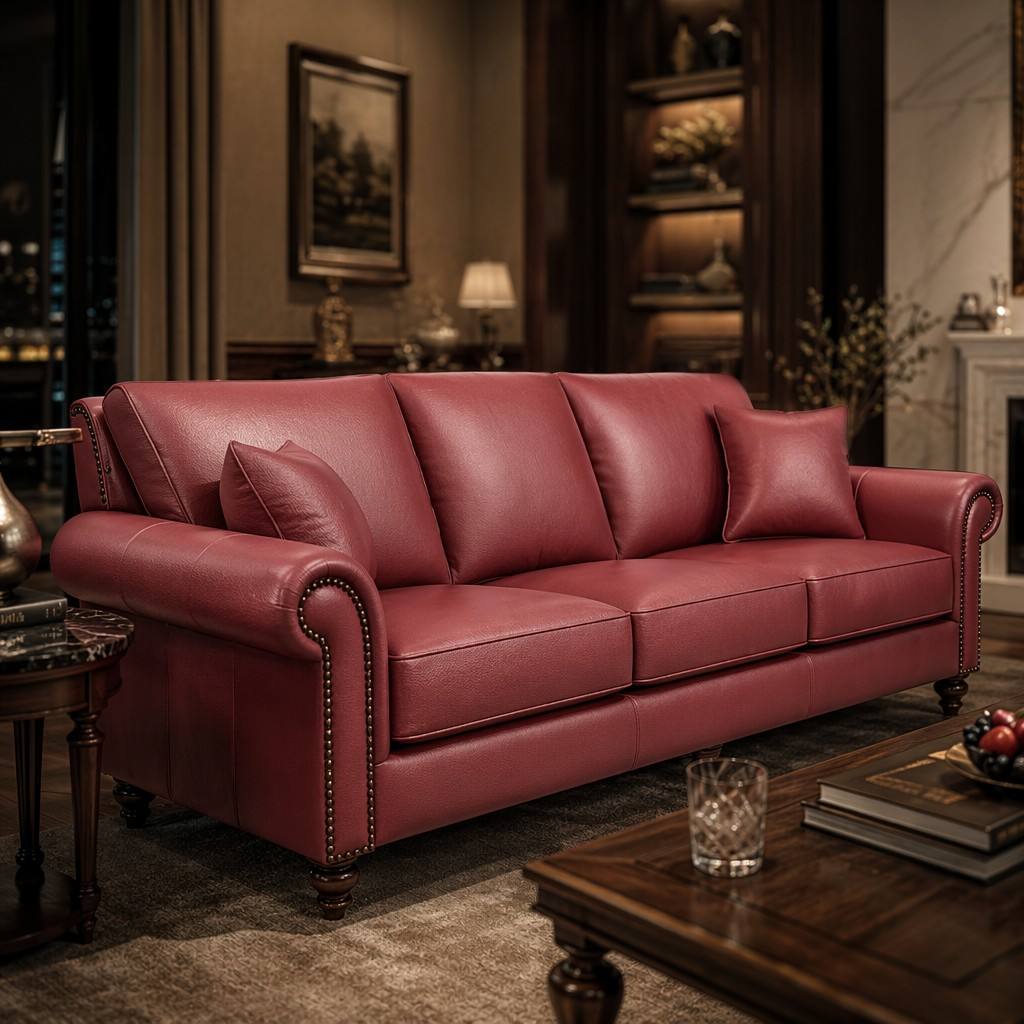
Tianhai Leather (Dongguan) Co., Ltd. provides synthetic-leather research, manufacturing, and customization services for global customers, including small-batch development.
Send us your application, target thickness, reference color or texture, estimated quantity, and required tests. Our team can discuss suitable material options and the development requirements for your project.
Start with a clear specification—not just a sample-book impression—to build a more reliable path from concept to production.
Hot Tags: China, Global, OEM, private label, manufacturers, factory, suppliers, manufacturing company
